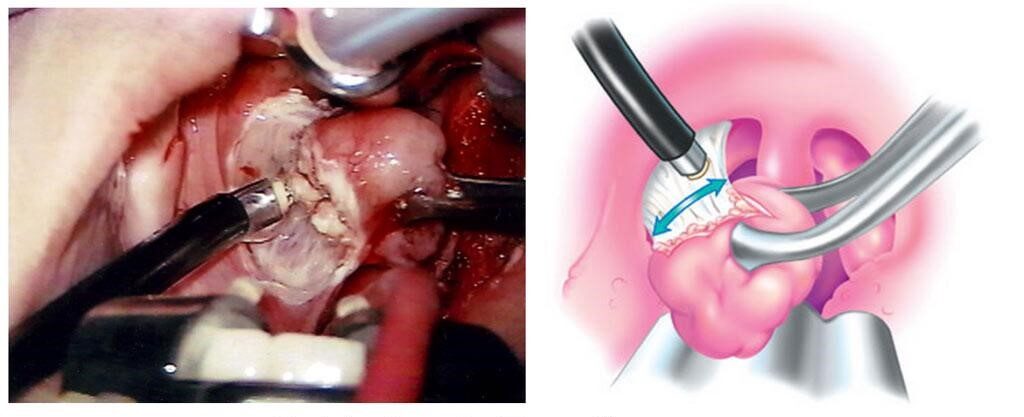
Coblation Adenotonsillectomy is a removal of the tonsil and adenoid tissue. It has the advantage of being less painful than a traditional tonsillectomy, with all the same benefits for sleep apnoea and recurrent tonsillitis. The risk of bleeding is lower, which is especially helpful with young children.
The primary indications for Coblation Adenotonsillectomy are:
- Obstructive Sleep apnea.
- Recurrent tonsillitis / Sore throats.
- Recurrent tonsillitis / Sore throats.
Coblation Adenotonsillectomy carries the same general risks as all operations, including:
- Pain
- Bleeding
- Infection
Preoperative Instructions
Coblation Adenotonsillectomy is performed under a general anaesthetic. You will need to fast before surgery and follow the instructions provided if you have any queries or concerns Dr SHALINA RAY, for the best Coblation Adenotonsillotomy surgery in Bangalore.
Procedure
Under a general anesthetic, the adenoids are removed from behind the nose with a particular instrument known as a coblation wand under endoscopic guidance.
The tonsils are also removed using the coblation wand, and any bleeding is also controlled with the same.
Postoperative Instructions
Return to normal activities.
It takes around seven days for most children to recover fully. You must keep your child away from daycare, kindergarten, and school during this period.
General activities can be resumed when your child feels up to it. Please avoid active sports, rough play & heavy lifting for two weeks.
Pain relief
Children will experience throat pain and discomfort for up to 10 days following surgery. Ear pain, jaw pain, and neck pain may also occur. This can be improved with pain relief but may not entirely disappear. During this time, your childwill be prescribed some regular pain relief.
Antibiotics
Antibiotics are regularly presscribed following surgery for a week. Please take as instructed if advised.
Diet
There are no restrictions on diet. Children are encouraged to drink as much as required to avoid dehydration. Ice blocks are a good option as they are soothing and aid hydration. cold feeds, non spicy soft food is what is tolerated during recovery.
This is acceptable if your child refuses solids but maintains good fluid intake. At least 80mls per kg body weight per day is recommended.
Fever
It is common to have a mild fever for the first 24-48 hours after the operation. Please call our practice if there is persistent fever greater than 38.5°C.
Bad Breath
This is expected following the removal of the tonsils and adenoids and is part of the normal healing process. The bad breath usually settles after around three weeks, if not sooner.
Bleeding
If there is any sign of fresh bleeding from the nose or mouth greater than a teaspoon in volume, consult immediately.
Usually, a follow-up is scheduled a week after surgery. If you wish to see your Surgeon at any stage, our staff will happily arrange an appointment. To learn more about Coblation Adenotonsillectomy treatment, contact Dr. SHALINA RAY, the best ENT doctor in Bangalore.
FAQs
Enlarged adenoids can obstruct the nasal airway, leading to persistent mouth breathing, loud snoring, restless sleep, nasal blockage, recurrent ear infections, and difficulty breathing through the nose.
Adenoidectomy is most commonly performed in children when enlarged adenoids cause persistent symptoms that do not improve with appropriate medical treatment. The decision is based on the child’s symptoms rather than age alone.
Coblation uses controlled radiofrequency energy to remove adenoid tissue with minimal heat damage to surrounding tissues, while conventional techniques use different surgical instruments. Coblation is associated with less postoperative pain and reduced intraoperative bleeding in many patients.
A microdebrider allows precise removal of enlarged adenoid tissue under endoscopic visualization, helping the surgeon remove the tissue accurately while protecting nearby healthy structures.
Yes. Enlarged adenoids may cause a blocked or nasal-sounding voice because they interfere with normal airflow through the nose. Many children experience improvement once the obstruction is treated.
The choice between Coblation and a microdebrider depends on factors such as the size of the adenoids, the child’s anatomy, associated ENT conditions, and the surgeon’s clinical assessment.
Yes. Enlarged adenoids can block the Eustachian tubes, increasing the likelihood of middle-ear fluid buildup and recurrent ear infections in children.
Most adenoidectomy procedures are performed as day-care surgeries, allowing children to return home on the same day if recovery from anesthesia is uneventful and the surgeon is satisfied with their condition.
In most children, adenoidectomy provides long-term relief. Although uncommon, a small amount of adenoid tissue may regrow in some cases.
Yes. If clinically indicated, adenoidectomy may be performed along with procedures such as ear tube insertion or tonsil surgery to address multiple ENT problems during the same anesthesia.