Introduction: When a Simple Cold Leaves Something Behind
A cold usually brings familiar symptoms: a blocked nose, sneezing, a runny nose and sometimes a sore throat or cough. As the infection settles, these symptoms generally begin to improve. However, for some people, one problem continues long after the others have disappeared—the inability to smell properly.
Morning coffee may lose its aroma. The fragrance of freshly cooked food may seem faint. Perfume, flowers and other familiar smells may become difficult to recognise. In some cases, food may taste different, or previously pleasant odours may suddenly seem unpleasant.
These changes can be confusing, particularly when nasal breathing has returned to normal.
A reduced sense of smell is medically known as hyposmia, while a complete loss of smell is called anosmia. When smell perception becomes distorted, the condition is known as parosmia.
Smell disturbances can occur following common respiratory infections, influenza, COVID-19 and other illnesses. Although recovery occurs in many cases, persistent symptoms may require further evaluation to understand the underlying cause.
For people living in Whitefield, Brookefield, Marathahalli, Kadugodi and other parts of Bengaluru, recognising the signs of persistent smell dysfunction can help them understand when an ENT consultation may be appropriate.
This article explores why smell loss occurs after viral infections, how different smell disturbances can be identified, what an ENT evaluation involves, and which approaches may support recovery.
Understanding How Your Sense of Smell Works
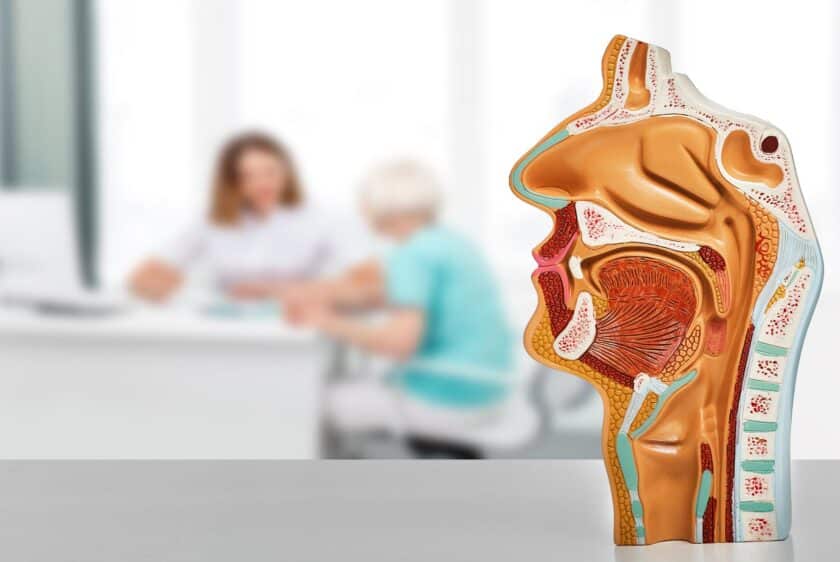
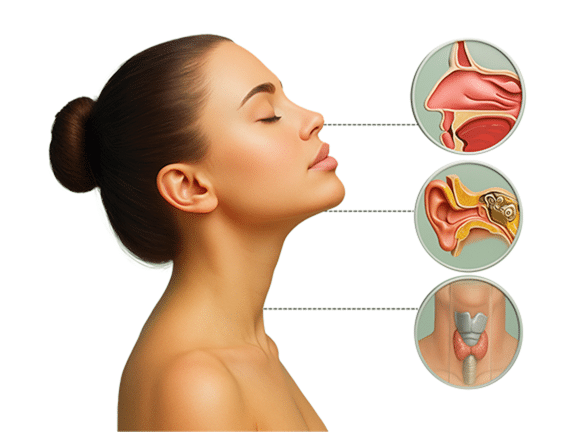
The sense of smell is more complex than simply detecting an odour through the nose. It involves specialised sensory cells, nerve pathways and areas of the brain that interpret chemical signals from the surrounding environment.
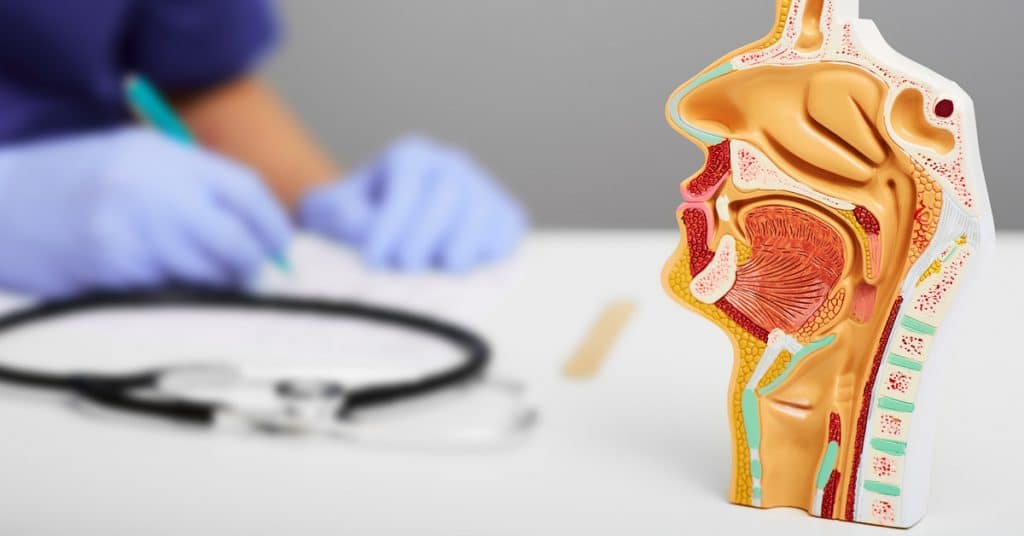
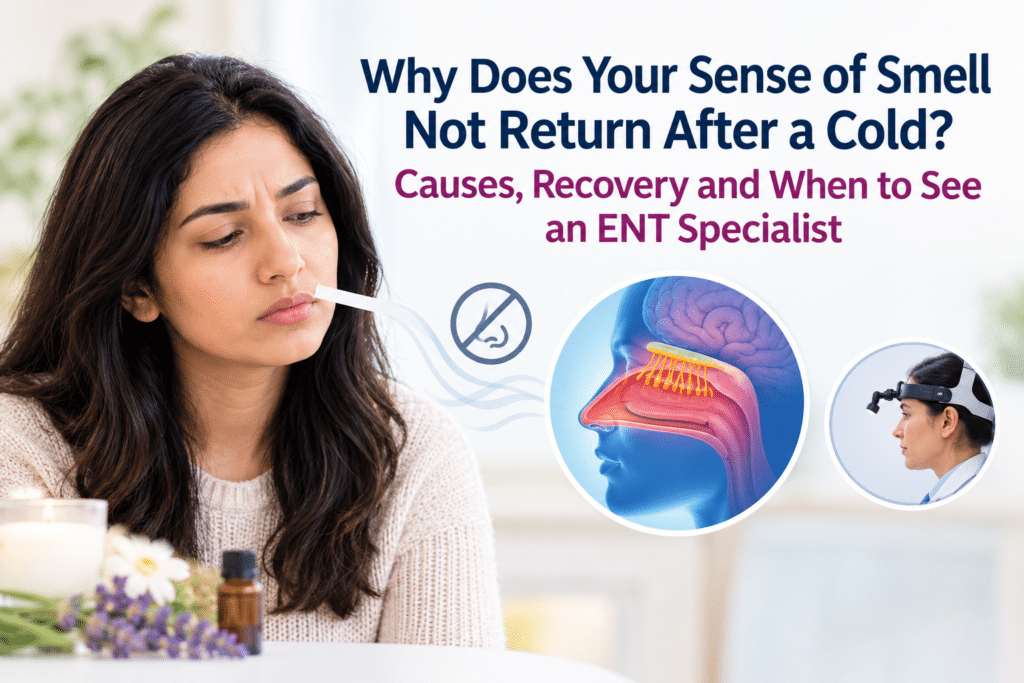
When you breathe in, airborne molecules enter the nasal cavity. These molecules reach a specialised area near the upper part of the nose called the olfactory region.
Sensory cells in this region detect the odour molecules and transmit signals through the olfactory nerves towards the brain. The brain processes these signals and helps you recognise individual smells.
This process allows you to distinguish between the aroma of coffee, the scent of flowers, the smell of rain-soaked earth and the fragrance of your favourite food.
When any part of this process is disrupted, the ability to smell may change.
There are two broad ways this can happen:
- Conductive smell loss: Swelling, mucus or an obstruction interferes with odour molecules reaching the smell-sensing region.
- Olfactory dysfunction: Changes affecting the smell-sensing cells or their associated pathways interfere with the detection or interpretation of odours.
These mechanisms can overlap, and the distinction is not always straightforward. An examination may be needed to determine which factors are contributing to an individual’s symptoms.
Why Can a Viral Infection Affect Your Sense of Smell?
Respiratory viruses can affect the nose and the olfactory system in different ways. The severity and duration of smell changes depend on the infection, the underlying nasal condition and individual recovery patterns.
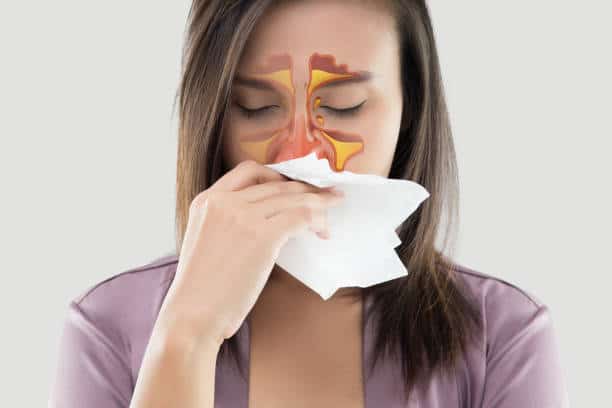
- Inflammation inside the nose
During a viral infection, the nasal lining may become swollen and produce additional mucus. This can interfere with airflow and prevent odour molecules from reaching the olfactory region efficiently.
When the infection improves and the inflammation settles, smell may gradually return.
However, persistent smell loss should not automatically be attributed to congestion, particularly when the nose feels clear.
- Changes affecting the olfactory system
Some viral infections can affect the supporting cells and structures involved in olfactory function. This may interfere with normal smell perception even after other respiratory symptoms have resolved.
A person may therefore experience persistent anosmia or hyposmia without having a runny or blocked nose.
The recovery process can vary considerably. Some people notice gradual improvement, while others experience prolonged symptoms or fluctuations in their ability to recognise odours.
- COVID-19-associated smell dysfunction
Loss or alteration of smell has been recognised as a symptom associated with COVID-19.
Some individuals regain their sense of smell relatively quickly. Others experience persistent reduction or distortion, including parosmia.
The presence of smell loss alone does not establish whether someone has COVID-19 or another infection. The cause must be considered in the context of other symptoms and the circumstances in which the problem developed.
- An existing nasal condition becomes more noticeable
A respiratory infection may draw attention to an underlying nasal problem that was previously mild.
For example, a person with allergic rhinitis or chronic rhinosinusitis may already have inflammation affecting smell. An additional infection may worsen the symptoms or make the smell disturbance more noticeable.
This is one reason a history of recurrent nasal blockage, allergies or sinus problems can be relevant when evaluating persistent smell loss.
Three Common Types of Smell Disturbance
Understanding the terminology can help people describe their symptoms more accurately during an ENT consultation.
Hyposmia: When smells become weaker
Hyposmia refers to a reduced ability to smell. A person may recognise strong odours but struggle to detect subtle fragrances.
Food may seem less aromatic, and everyday smells may become difficult to distinguish. The degree of smell reduction can range from mild to substantial.
Anosmia: When smell disappears
Anosmia refers to a complete loss of the sense of smell.
A person with anosmia may be unable to recognise familiar odours even when they are close to the source. This can affect food enjoyment, environmental awareness and everyday safety.
Anosmia can have several causes, including viral infections, nasal obstruction, head injury and other medical conditions.
Parosmia: When familiar smells seem different
Parosmia involves a distorted perception of an odour that is actually present.
For example, coffee may smell burnt, cooked food may seem unpleasant, or a familiar fragrance may have a chemical-like odour.
These changes can be frustrating because the person may recognise that the smell is different from what they previously experienced.
Parosmia can occur during recovery from certain viral infections. Its duration and severity vary, and it does not necessarily mean that the sense of smell has permanently deteriorated.
Another condition, called phantosmia, involves perceiving a smell when no identifiable external odour is present. Persistent or recurrent episodes should be discussed during a medical assessment.
Why Does Food Taste Different When You Lose Your Sense of Smell?
One of the most noticeable effects of smell loss is a change in the experience of eating.
People often describe this as losing their sense of taste. However, smell contributes substantially to the flavour of food.
The tongue detects basic taste sensations, including sweet, salty, sour, bitter and umami. The nose provides additional information about the aroma and complexity of food.
When you eat, aromatic molecules travel from the mouth towards the nasal cavity. The brain combines this information with taste and other sensory signals to create the overall experience of flavour.
When olfactory function is reduced, familiar foods may seem bland or less distinctive.
This may lead to several difficulties:
- Meals become less enjoyable.
- Appetite may decrease.
- Previously preferred foods may seem unappealing.
- People may add excessive salt or sugar in an attempt to improve flavour.
- Changes in eating habits may affect nutritional intake.
If smell loss causes persistent poor appetite, difficulty maintaining a balanced diet or unintended weight loss, these changes should be discussed during a medical assessment.
It is also important to remember that an inability to smell does not mean food is safe or unsafe. Food safety should be judged using proper storage practices, expiry information and other appropriate precautions rather than smell alone.
When Is Persistent Smell Loss a Reason for Concern?
Not every episode of smell loss requires extensive investigation. A temporary reduction during a cold may improve as the infection settles.
However, the pattern of symptoms matters.
Consider arranging an ENT assessment if:
- Your sense of smell does not return after the other symptoms of a viral infection have resolved.
- You experience complete or marked smell loss without an obvious explanation.
- Your sense of smell repeatedly improves and deteriorates.
- You develop persistent nasal blockage or facial pressure alongside smell loss.
- Familiar odours become consistently distorted or unpleasant.
- Smell changes begin after a head injury.
- Reduced smell interferes with eating, daily activities or safety.
The duration alone does not identify the cause. The nature of the symptoms, associated features and examination findings all contribute to the assessment.
Symptoms that require urgent medical attention
Smell loss accompanied by sudden facial weakness, difficulty speaking, new limb weakness or a sudden severe headache requires urgent assessment.
Smell loss following a significant head injury should also be assessed promptly.
Severe swelling around the eyes, changes in vision or other rapidly worsening symptoms associated with nasal or sinus problems require urgent medical attention.
These symptoms should not be managed by waiting for a routine ENT appointment.
How Does an ENT Specialist Evaluate Loss of Smell?
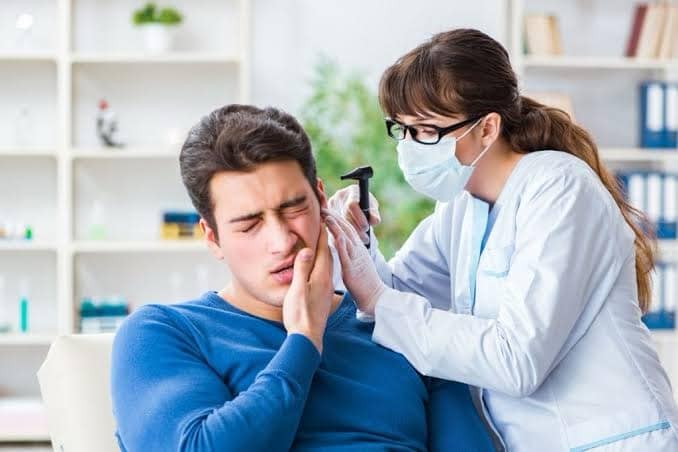
An ENT evaluation aims to identify possible causes, assess the extent of smell dysfunction and determine whether further investigations are necessary.
Step 1: Reviewing the history
The assessment usually begins with questions about how the problem started and how it has progressed.
The doctor may ask:
- Did smell loss begin during or after a cold?
- Was there a recent history of COVID-19 or another respiratory illness?
- Is the loss partial or complete?
- Can some smells still be recognised?
- Do familiar smells seem distorted?
- Is there nasal blockage, discharge, facial discomfort or a history of allergies?
- Has there been a previous head injury or nasal surgery?
- Are any medicines or chemical exposures relevant?
- Has the problem affected appetite or weight?
These details help distinguish between possible explanations and identify symptoms that may need further investigation.
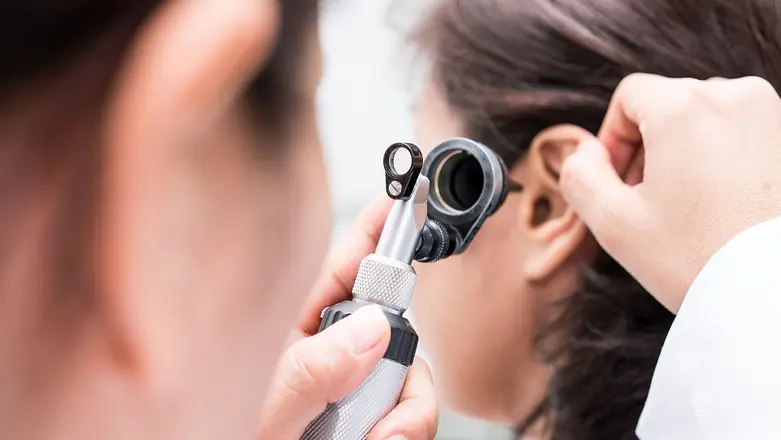
Step 2: Examining the nose
An examination may help identify swelling, inflammation, nasal polyps or structural abnormalities.
The findings can provide information about whether nasal obstruction or an inflammatory condition may be contributing to the problem.
A normal-looking nasal passage does not necessarily rule out olfactory dysfunction, since some causes affect smell perception without producing obvious blockage.
Step 3: Nasal endoscopy when indicated
Nasal endoscopy involves using a specialised instrument with a light and camera to examine areas inside the nasal cavity.
It may be considered when the symptoms or initial examination suggest that a more detailed assessment is needed.
The procedure can help identify certain nasal or sinus abnormalities that may not be fully visible during a routine examination.
Step 4: Assessing smell function
Structured smell tests may be used to assess the ability to detect or identify odours.
Testing can help establish the degree of impairment and, in some circumstances, provide a baseline for assessing changes over time.
The choice of test depends on the clinical situation and the facilities available.
Step 5: Considering additional investigations
Imaging or other investigations may be considered when the history and examination suggest an underlying condition that needs further evaluation.
For example, persistent symptoms accompanied by particular examination findings may require a different approach from smell loss that began during an uncomplicated respiratory infection.
Not everyone with smell loss requires a CT scan, MRI or blood tests. Investigations should be guided by the individual presentation.
What Treatment Options May Be Considered for Post-Viral Smell Loss?
Management depends on the cause of the smell disturbance, its duration and the findings of the assessment.
There is no single treatment that is appropriate for every person experiencing smell loss.
Olfactory training
Olfactory training, also called smell training, is a structured method that involves repeatedly smelling a small selection of familiar scents over time.
It is commonly considered for persistent post-viral olfactory dysfunction.
The aim is to provide regular, structured exposure to odours as part of a consistent routine. It is different from repeatedly sniffing random products throughout the day to check whether smell has returned.
Improvement, when it occurs, may be gradual. The response varies between individuals, and smell training does not guarantee complete recovery.
A clinician can explain whether it is suitable and how to approach it appropriately.
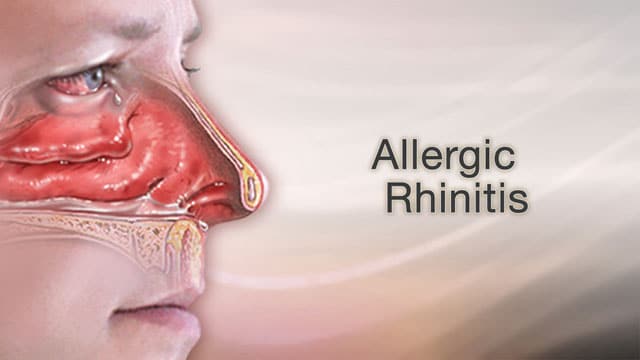
Managing allergic rhinitis
When allergies contribute to nasal inflammation and smell reduction, management may focus on the allergic condition.
Relevant symptoms can include repeated sneezing, nasal itching, watery discharge and congestion.
Addressing the underlying inflammation may help when the smell disturbance is related to that condition. However, allergy management does not necessarily resolve every type of post-viral olfactory dysfunction.
Managing chronic rhinosinusitis or nasal polyps
Chronic rhinosinusitis is an inflammatory condition involving the nasal cavity and sinuses. It may be associated with persistent blockage, discharge, facial pressure and a reduced sense of smell.
Nasal polyps can also interfere with airflow and olfactory function.
When these conditions are identified, management is directed towards the underlying problem. The approach depends on the severity of symptoms, examination findings and response to appropriate medical management.
Surgery is not required for every person with sinus symptoms or smell loss. It may be considered in selected cases when clinically indicated.
Reviewing medicines and environmental exposures
Some medicines and chemical exposures may contribute to changes in smell.
A review of relevant medications, occupational exposures and other circumstances may help identify possible contributing factors.
Do not discontinue prescribed medication without discussing it with the prescribing clinician.
Why self-medication may not address the cause
People experiencing smell loss sometimes try nasal sprays, antibiotics, oral steroids or other products without first establishing the underlying cause.
These treatments are not interchangeable, and they do not all have a role in every form of smell dysfunction.
For example, an intervention intended to reduce nasal inflammation may not address olfactory dysfunction that persists despite normal nasal airflow.
The appropriate approach depends on the clinical findings rather than the symptom alone.
Can You Prevent Smell Loss After a Viral Infection?
Not every case of post-viral smell dysfunction can be prevented. Some changes occur despite reasonable precautions and appropriate management of the initial illness.
However, several practical measures can support general nasal health and reduce avoidable risks.
Manage known allergies. People with recurrent allergic symptoms can discuss appropriate strategies for managing their condition and reducing relevant triggers.
Avoid nasal irritants. Tobacco smoke, harsh chemical fumes and other irritants can affect the respiratory lining. Avoid deliberate exposure to strong chemicals in an attempt to stimulate the sense of smell.
Follow appropriate infection precautions. Routine hand hygiene and sensible measures to reduce respiratory infection transmission remain useful general health practices.
Avoid unnecessary medication use. Antibiotics are not effective against viruses, and medicines should not be taken solely because smell has changed.
Seek assessment when symptoms persist. Ongoing or unexplained smell loss may require evaluation to identify an underlying nasal, olfactory or other medical condition.
These measures support general health but cannot guarantee that smell dysfunction will not occur.
Everyday Safety Tips for People With a Reduced Sense of Smell
The sense of smell provides important information about the surrounding environment. When it is reduced, certain hazards may become harder to detect.
Check smoke and gas safety
Make sure suitable smoke alarms and, where applicable, gas or carbon-monoxide detectors are installed and maintained according to the manufacturer’s instructions.
Do not rely on your ability to smell smoke or gas to determine whether an environment is safe.
Follow food safety guidance
Food that appears and smells normal may still be unsafe. Follow recommended storage instructions, expiry information and safe food-handling practices.
When food safety is uncertain, discard it rather than relying on smell to make the decision.
Make meals enjoyable in other ways
If flavour perception is reduced, experimenting with food texture, temperature and presentation may improve the eating experience.
Avoid adding excessive salt or sugar simply because food tastes less flavourful.
Monitor nutritional changes
If smell loss reduces appetite, monitor whether you are eating enough and maintaining your usual weight. Persistent difficulty with food intake deserves attention.
Record changes in symptoms
Keeping a simple record of when smell loss began, which odours you can recognise and whether symptoms are improving may help during an ENT consultation.
What Should You Expect During Recovery?
Recovery does not follow the same pattern for everyone.
Some people notice gradual improvement over a relatively short period. Others experience persistent reduction in smell, fluctuating symptoms or parosmia during recovery.
A person may regain the ability to detect certain odours before others. Some smells may seem distorted even when other aspects of olfactory function begin to improve.
These differences do not, by themselves, establish whether recovery will be complete.
It is also important not to assume that persistent smell loss is necessarily permanent. The course depends on the underlying cause, and the appropriate assessment may help clarify the next steps.
When symptoms continue, follow-up can be useful for reviewing changes, reconsidering possible causes and deciding whether further assessment is appropriate.
Frequently Asked Questions About Loss of Smell After a Viral Infection
- How long does it take to regain smell after a cold?
The duration varies depending on the cause and severity of the smell disturbance. Some people improve as nasal inflammation settles, while others experience symptoms for weeks or months. Persistent symptoms should be evaluated rather than assuming recovery will occur within a fixed period.
- Can I lose my sense of smell without having a blocked nose?
Yes. Smell dysfunction can persist even when nasal breathing feels normal. This may occur when the olfactory system is affected rather than when nasal airflow is the main problem.
- Is loss of smell always caused by COVID-19?
No. Other viral respiratory infections, allergic inflammation, chronic rhinosinusitis, nasal polyps, head injuries, certain medicines and other conditions can also affect smell.
- What is the difference between loss of smell and loss of taste?
Loss of smell affects the ability to detect odours. Loss of taste affects the perception of basic tastes, such as sweet, salty, sour, bitter and umami. Because smell contributes substantially to flavour, olfactory dysfunction can make food seem bland even when basic taste perception remains intact.
- Why does coffee smell burnt or unpleasant after COVID-19?
This may be an example of parosmia, in which a familiar odour is perceived differently. Parosmia can occur after certain viral infections, including COVID-19, and may persist during recovery.
- Can smell training restore my sense of smell completely?
Olfactory training may help some people with persistent post-viral smell dysfunction, but the degree of improvement varies. Complete recovery cannot be guaranteed, and the approach should be considered in the context of the underlying condition.
- Should I use nasal sprays for smell loss?
The usefulness of nasal sprays depends on the cause. Some treatments may be appropriate when nasal inflammation contributes to the problem, but they are not universally effective for all forms of olfactory dysfunction. Treatment selection should take the clinical findings into account.
- Do antibiotics help with smell loss after a viral infection?
Antibiotics treat certain bacterial infections and do not treat viral infections directly. They are not routinely appropriate for post-viral smell loss unless a separate bacterial condition is identified and treatment is indicated.
- Does every person with persistent smell loss need a scan?
No. Imaging is not routinely necessary for every case. The decision depends on the medical history, examination findings and whether there are features suggesting an underlying condition that needs further investigation.
- Can smell loss affect appetite and body weight?
Yes. Reduced smell can make food less appealing and alter flavour perception. If this leads to reduced food intake or unintended weight loss, the issue should be discussed during a medical assessment.
- What is phantosmia?
Phantosmia refers to perceiving a smell when there is no identifiable external source. It differs from parosmia, in which an existing odour is perceived incorrectly. Persistent or recurrent episodes warrant assessment.
- When should I consult an ENT specialist in Whitefield, Bengaluru?
Consider an ENT consultation if smell loss persists after an infection, occurs without a clear explanation, repeatedly returns or is accompanied by ongoing nasal symptoms. Smell loss following significant head trauma or accompanied by sudden neurological symptoms requires urgent medical attention.
When to Arrange an ENT Consultation in Whitefield, Bengaluru
A reduced sense of smell may initially appear to be a minor inconvenience, particularly when it follows a common cold. However, persistent symptoms can affect food enjoyment, nutrition, environmental awareness and everyday quality of life.
Understanding the possible cause is an important part of determining the next steps. An ENT assessment may help identify whether nasal inflammation, chronic sinus disease, post-viral olfactory dysfunction or another condition is contributing to the problem.
Dr. Shalina Ray holds DLO, MS (ENT), MRCS (UK) and DOHNS (UK) qualifications and provides ENT consultations in Bengaluru, including at Manipal Hospital, Whitefield.
If you are experiencing persistent smell loss, altered smell perception or associated nasal symptoms, you may arrange an appointment for an ENT assessment.